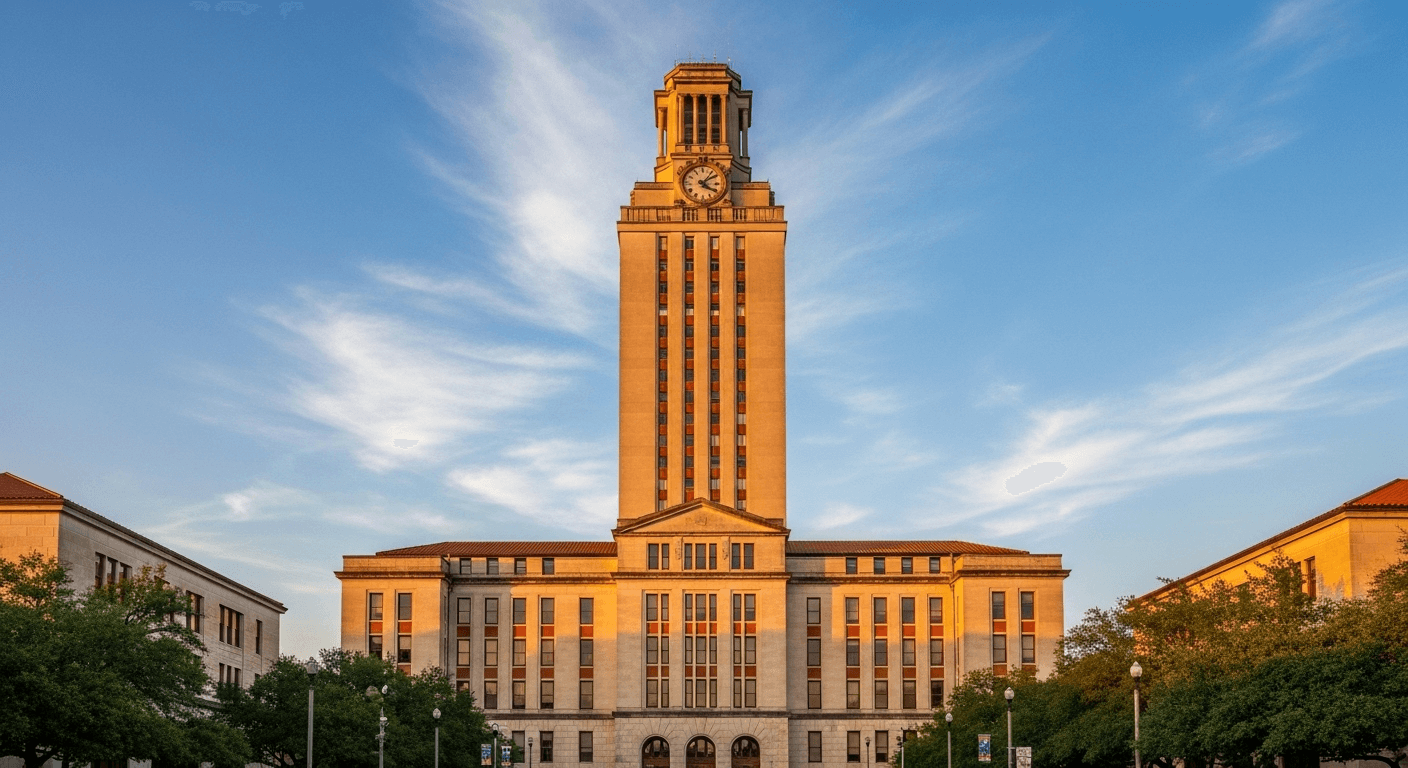
UT Austin · Honors programs
UT Austin Honors Programs
UT Austin has eight major honors programs across multiple colleges, plus the separate Forty Acres Scholars Program. Most require a separate application by November 1. Plan II is the flagship interdisciplinary honors program; BHP is the flagship business honors program; Turing Scholars is the flagship CS research honors track. Each provides smaller class sizes, faculty research access, and priority for institutional scholarships and post-graduation placement. For high-academic UT applicants, applying to honors substantially improves the UT experience.
Plan II Honors (the flagship interdisciplinary program)
- What it is: Interdisciplinary liberal arts honors program established 1935. Custom curriculum across literature, philosophy, history, science, government.
- Size: ~175 students per cohort
- Selectivity: ~15-20% acceptance rate from a self-selected applicant pool of high-academic students
- Average admitted profile: 4.0 unweighted GPA, SAT 1500+, deep extracurricular impact
- Curriculum: Custom Plan II core + can dual-major with any UT major
- Distinctive features: Senior thesis required; small seminar classes (8-15 students); senior faculty teach; sophomore-year retreat; Plan II network across alumni
- Application: Separate Plan II essay submitted with UT application; deadline November 1
- Scholarships: Dedman Scholarships, Junior Fellows, and other named awards
Business Honors Program (BHP) at McCombs
- What it is: McCombs Business honors program; combines business education with Plan II honors courses
- Size: ~100 students per cohort
- Selectivity: ~10-15% acceptance rate; admitted alongside or after McCombs admission
- Average admitted profile: 4.0 unweighted GPA, SAT 1500+, leadership in business or related activities
- Curriculum: Standard McCombs BBA + BHP honors core + Plan II honors courses; can pursue any McCombs major (Finance, MIS, Marketing, Accounting, Management, Supply Chain)
- Distinctive features: Tighter cohort; priority placement to top investment banks, consulting, and Fortune 500 companies; substantial scholarship eligibility
- Application: Separate BHP supplemental essays submitted with UT/McCombs application
- Scholarships: McCombs Endowed Presidential Scholarships, BHP-specific awards
Turing Scholars in Computer Science
- What it is: CS research-track honors program for top CS undergraduates
- Size: ~20-25 students per cohort
- Selectivity: ~5-8% acceptance rate; invitation-only after CS admission
- Average admitted profile: 4.0 unweighted GPA, SAT 1500+, substantial CS research or competitive programming background
- Curriculum: CS major + Turing research track + faculty mentorship + accelerated coursework option
- Distinctive features: Research-focused; option to complete Master's thesis as undergraduate; direct pathway to top PhD programs (MIT, CMU, Stanford, Berkeley)
- Application: Identified after CS admission based on application profile; no separate application
- Scholarships: Turing Scholars receive priority for CS-specific funding and research stipends
Liberal Arts Honors
- What it is: College of Liberal Arts honors program (separate from Plan II)
- Size: ~50-75 students per cohort
- Selectivity: ~20-30% acceptance rate
- Curriculum: Honors versions of Liberal Arts core courses; honors-specific seminars; thesis option
- Application: Separate essay submitted with UT application
Engineering Honors (Cockrell)
- What it is: Cockrell School of Engineering honors track
- Size: ~150 students across all engineering disciplines per cohort
- Selectivity: ~15-25% acceptance rate by discipline
- Curriculum: Standard engineering major + honors-specific courses + research/thesis option
- Distinctive features: Research mentorship; priority for engineering scholarships; Cockrell-specific honors network
- Application: Separate essay submitted with UT/Cockrell application
Natural Sciences Honors (multiple tracks)
College of Natural Sciences offers multiple honors tracks within different academic areas:
- Polymathic Scholars: interdisciplinary honors program combining natural sciences with humanities and policy. ~30 students per cohort.
- Health Science Scholars: pre-med focused honors program with strong pre-med advising. ~30-40 students per cohort.
- Dean's Scholars: top-academic students across natural sciences; broad eligibility. ~150 students per cohort.
- Computational Sciences Scholars: combines biology/chemistry/physics with computer science and data analytics.
- Application: separate essays for most programs; varying selectivity (5-30% by program)
Architecture Honors
- What it is: School of Architecture honors program
- Curriculum: Architecture major + honors-specific design studios + thesis
- Application: by application after Architecture admission
Communication Honors (Moody)
- What it is: Moody College of Communication honors program
- Curriculum: Communication major + honors-specific courses + senior thesis
- Application: separate application submitted with UT/Moody application
Forty Acres Scholars Program (separate flagship)
- What it is: UT's flagship full-ride scholarship (covers tuition, room and board, books, enrichment fund); a scholarship rather than an honors academic program
- Size: ~15-20 awards per year
- Selectivity: ~1% acceptance rate from competitive applicant pool
- Available to: incoming freshmen including out-of-state students
- Application: Separate Forty Acres application with additional essays; deadline November 1; on-campus finalist interviews in February
- Distinctive features: Cohort of 80 active scholars at any time; mentor-mentee program; faculty research access; enrichment funds for study abroad, internships, research
How to apply to UT honors programs
- Identify target programs early. Junior year of high school: research each program of interest. Match program characteristics to your interests and academic profile.
- Apply to UT by November 1 priority deadline. Most honors applications align with this deadline.
- Complete each honors program's separate application. Plan II essay, BHP essays, Liberal Arts Honors essay, etc. submit alongside the main UT application.
- Apply to multiple programs if appropriate. A pre-med applicant might apply to Health Science Scholars + Natural Sciences Honors + Plan II. A business applicant might apply to BHP + Plan II + Liberal Arts Honors.
- Apply to Forty Acres Scholars by November 1 if your profile supports. Forty Acres is separate from honors academic programs.
- Complete UT Honors and Scholarship Application (HSA) after admission to be considered for institutional merit scholarships across honors programs.
The honors programs admissions standard
Across UT honors programs, the academic standard is consistent: top 5-10% of class, SAT 1450+ or ACT 33+, substantial extracurricular depth in one or two areas. Specific programs have additional considerations (Turing Scholars requires CS background; BHP values business leadership; Plan II values intellectual breadth). For families with high-academic students, applying to UT plus one or more honors programs maximizes both admission probability and the quality of the resulting UT experience.
The combined honors + residency picture
Honors + residency pathway
An out-of-state student admitted to Plan II Honors and BHP and pursuing the Texas residency pathway sees: (1) BHP-level academic experience with smaller classes and stronger faculty access; (2) Plan II interdisciplinary breadth; (3) UT in-state tuition rate after year 1, saving approximately $99,660 in tuition over three years. The combination of honors-level academic experience + reduced tuition rate produces a four-year cost picture competitive with private universities at full sticker.
Frequently asked questions
What honors programs does UT Austin have?
Which UT Austin honors program is the most prestigious?
What is Plan II Honors at UT Austin?
What is the Business Honors Program (BHP) at McCombs?
What is Turing Scholars in Computer Science?
How do I apply to UT Austin honors programs?
Do UT Austin honors programs come with scholarships?
Are UT Austin honors programs worth applying to?
Talk to Luke
Your situation is specific. Get a written answer.
The site covers the general case. If your circumstances do not quite fit — divorce, military, scholarship interactions, late timing, prior denial — send a message. Luke replies personally, usually within one business day.
Or send a message and Luke will reply in writing: