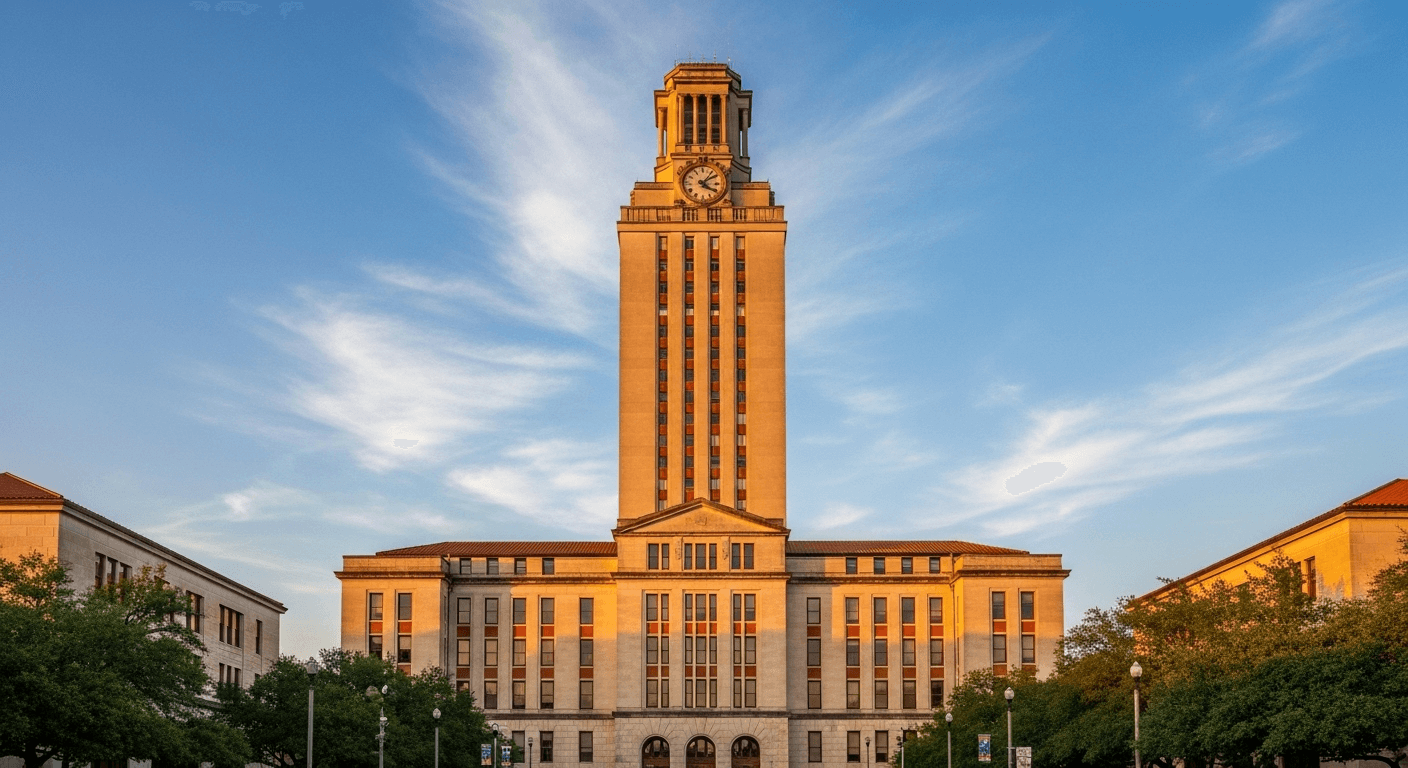
UT Austin comparison · vs Columbia
UT Austin vs Columbia University
UT Austin in-state tuition is $11,688/year vs Columbia in-state at $68,000/year. Out-of-state at UT is $44,908/year vs Columbia out-of-state at $68,000/year. For out-of-state families, the Texas residency pathway can convert the UT non-resident rate to the resident rate in 12 months, making UT after residency the cheapest of the four classifications.
Summary
UT Austin and Columbia represent different university models. Columbia is a top-10 US private Ivy League research university in New York City. UT is a top-30 public flagship in Austin. Columbia sticker: ~$68,000/year. UT non-resident: $44,908. Columbia offers substantial need-based aid. For high-income families, UT with Texas residency pathway is dramatically cheaper.
Cost comparison
| Tuition + Required Fees | UT Austin | Columbia | Difference |
|---|---|---|---|
| In-state (resident) | $11,688 | $68,000 | UT cheaper by $56,312 |
| Out-of-state (non-resident) | $44,908 | $68,000 | UT cheaper by $23,092 |
| UT after Texas residency | $11,688 | vs Columbia in-state: $56,312 cheaper at UT |
Columbia sticker approximately $68,000/year. Columbia need-based aid: no loans for families under $150K AGI; substantial aid up to $250K AGI. For higher-income families, Columbia approaches sticker cost. UT with Texas residency pathway dramatically cheaper.
Where UT Austin wins
- UT non-resident at $44,908 is materially cheaper than Columbia sticker at $68,000
- UT after Texas residency at $11,688 is dramatically cheaper than Columbia
- McCombs Business direct-admit undergrad (Columbia has no undergrad business school; CBS is grad)
- Austin tech industry is comparable to NYC tech at much lower cost of living
- Broader undergraduate program breadth including engineering and CS at top-tier level
- Texas residency pathway is unique to UT among top publics
Where Columbia wins
- Columbia ranks top 10 nationally (UT top 30)
- Columbia Journalism School is elite (graduate)
- Columbia Business School (Fu Foundation Engineering) has strong reputation
- NYC location provides unmatched Wall Street, media, and cultural access
- Columbia Core Curriculum is distinctive undergraduate experience
- Ivy League brand recognition and alumni network
Program comparison
For overall prestige: Columbia wins (top 10 vs UT top 30). For undergrad Business: UT wins (McCombs direct admit; Columbia CBS is grad-only). For CS: comparable at top-15 tier. For Journalism graduate: Columbia J-School is elite. For NYC-adjacent finance and media careers: Columbia has substantial advantage.
Admissions comparison
Columbia acceptance rate ~4%; UT ~31% overall. Columbia is dramatically more selective. Columbia values Core Curriculum fit and NYC engagement.
Culture and campus
Columbia is in New York City, urban campus with global influence. UT Austin is in Austin, large public research university, growing city. NYC vs Austin lifestyle difference is significant.
The Texas residency angle
For families admitted to Columbia with substantial aid: Columbia can be competitive with UT. For higher-income families: UT after Texas residency is dramatically cheaper than Columbia. NYC cost of living further differentiates.
Frequently asked questions
Is Columbia better than UT?
Is UT cheaper than Columbia?
What about NYC access from Columbia?
Talk to Luke
Your situation is specific. Get a written answer.
The site covers the general case. If your circumstances do not quite fit — divorce, military, scholarship interactions, late timing, prior denial — send a message. Luke replies personally, usually within one business day.
Or send a message and Luke will reply in writing: