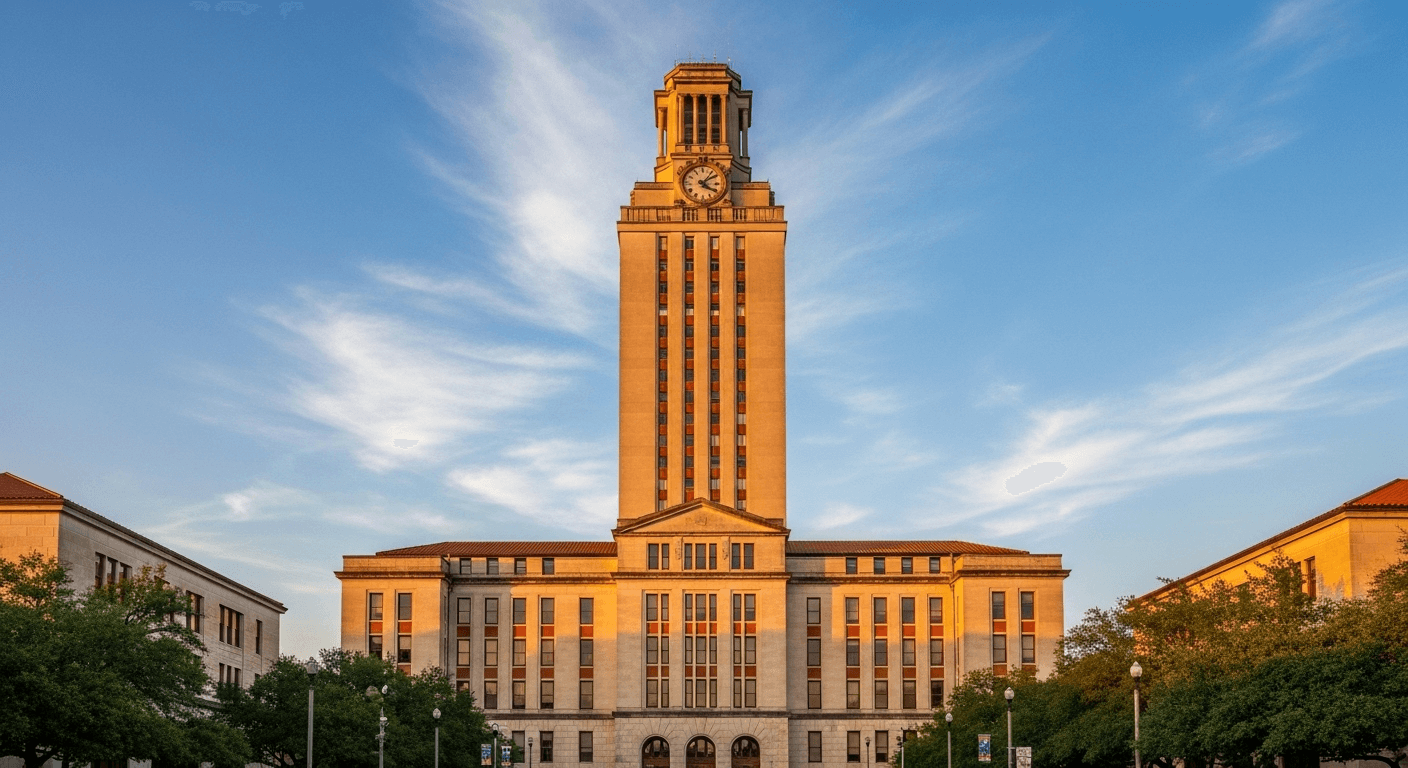
UT Austin comparison · vs UC Berkeley
UT Austin vs University of California, Berkeley
UT Austin in-state tuition is $11,688/year vs UC Berkeley in-state at $14,934/year. Out-of-state at UT is $44,908/year vs UC Berkeley out-of-state at $48,500/year. For out-of-state families, the Texas residency pathway can convert the UT non-resident rate to the resident rate in 12 months, making UT after residency the cheapest of the four classifications.
Summary
UT Austin and UC Berkeley are flagship public universities in the top 15-25 nationally, with strong programs in engineering, business, and computer science. Berkeley generally outranks UT in pure prestige and several STEM rankings; UT outranks Berkeley in some practical metrics like job placement to Texas-based employers and undergraduate admission accessibility. The cost difference is significant: Berkeley out-of-state at ~$48,500 is similar to UT out-of-state at $44,908; after residency, UT in-state at $11,688 is cheaper than Berkeley in-state at ~$14,900.
Cost comparison
| Tuition + Required Fees | UT Austin | UC Berkeley | Difference |
|---|---|---|---|
| In-state (resident) | $11,688 | $14,934 | UT cheaper by $3,246 |
| Out-of-state (non-resident) | $44,908 | $48,500 | UT cheaper by $3,592 |
| UT after Texas residency | $11,688 | vs UC Berkeley in-state: $3,246 cheaper at UT |
Berkeley costs more in both classifications: about $3,200/year more for residents ($14,934 vs $11,688) and about $3,600/year more for non-residents ($48,500 vs $44,908). For out-of-state students, the Texas residency pathway works at UT but California has no equivalent fast-track residency pathway, making UT after residency dramatically cheaper than Berkeley out-of-state.
Where UT Austin wins
- McCombs Business outranks Haas in undergraduate experience and accessibility (Haas admits only ~10% of UC Berkeley undergrads to its junior-senior program)
- Cost of attendance is lower for residents and especially for Texas residents through the residency pathway
- Austin's tech industry rivals San Francisco/Bay Area at significantly lower cost of living
- Direct CS admission less complex than Berkeley's EECS/L&S CS distinction
- Plan II Honors interdisciplinary program is distinctive
- Less crowded majors and easier course access in some departments
Where UC Berkeley wins
- Berkeley generally outranks UT on prestige metrics (US News, Times, QS)
- Engineering disciplines (especially EECS and Mechanical) typically rank higher at Berkeley
- Pre-med to top medical school admission stronger from Berkeley
- Bay Area tech recruiting is unmatched; Apple, Google, Meta, OpenAI are all within easy reach
- Stronger international student community
- Cultural and political activism tradition that some students value
Program comparison
For Business: McCombs (UT) admits all admitted undergrads to the business school directly. Haas (Berkeley) requires a separate junior-year application and admits about 10% of applicants, making it inaccessible for most UC Berkeley students. For Computer Science: Berkeley EECS and L&S CS both rank in the top 5; UT CS ranks in the top 10. Both are excellent. For Engineering: Berkeley generally ranks higher in EECS, Mechanical, and Chemical. UT Cockrell is competitive in Petroleum, Civil, and Biomedical. For Liberal Arts: Berkeley ranks higher overall; UT has Plan II Honors as a distinctive offering. For Pre-Med: Berkeley generally has a stronger pipeline to top medical schools, but UT pre-med outcomes are also strong.
Admissions comparison
Berkeley acceptance rate is about 11-12%, significantly more selective than UT at ~30%. However, UT's top programs (McCombs, CS) are similarly selective to Berkeley overall. Berkeley admissions emphasizes diverse interests and substantial extracurricular accomplishment. UT admissions for in-state students uses the Texas Top 10% Rule (automatic admission for top 6% of Texas high school graduates); out-of-state admissions is more holistic but heavily weighted to academic profile.
Culture and campus
Berkeley is in the heart of the Bay Area, with extensive activist tradition, diverse politics, and intense intellectual environment. The campus is dense and the surrounding town small but very engaged. UT Austin sits in the heart of Austin, with Sixth Street and the music industry within walking distance. Austin's political mix is broader (state government plus tech industry plus arts community). Cost of living in Berkeley/Bay Area is dramatically higher than Austin for off-campus living.
The Texas residency angle
The single largest cost difference between these schools comes from residency. UT Austin offers the Texas residency pathway under Texas Education Code §54.052: 12 months of Texas domicile establishes Texas residency for tuition purposes, dropping the rate from $44,908 to $11,688. California has no comparable fast-track residency pathway; California requires substantive independent residence with no parental support for a longer period and is far more difficult to establish for college students. For an out-of-state family, UT after residency at $11,688 vs Berkeley out-of-state at $48,500 is a four-year savings of approximately $147,000.
Frequently asked questions
Is Berkeley better than UT Austin?
Can I get California residency to pay UC in-state tuition?
How does Austin compare to Berkeley as a college town?
What is the four-year cost difference between UT after residency and Berkeley out-of-state?
Which has better job placement for tech?
Talk to Luke
Your situation is specific. Get a written answer.
The site covers the general case. If your circumstances do not quite fit — divorce, military, scholarship interactions, late timing, prior denial — send a message. Luke replies personally, usually within one business day.
Or send a message and Luke will reply in writing: