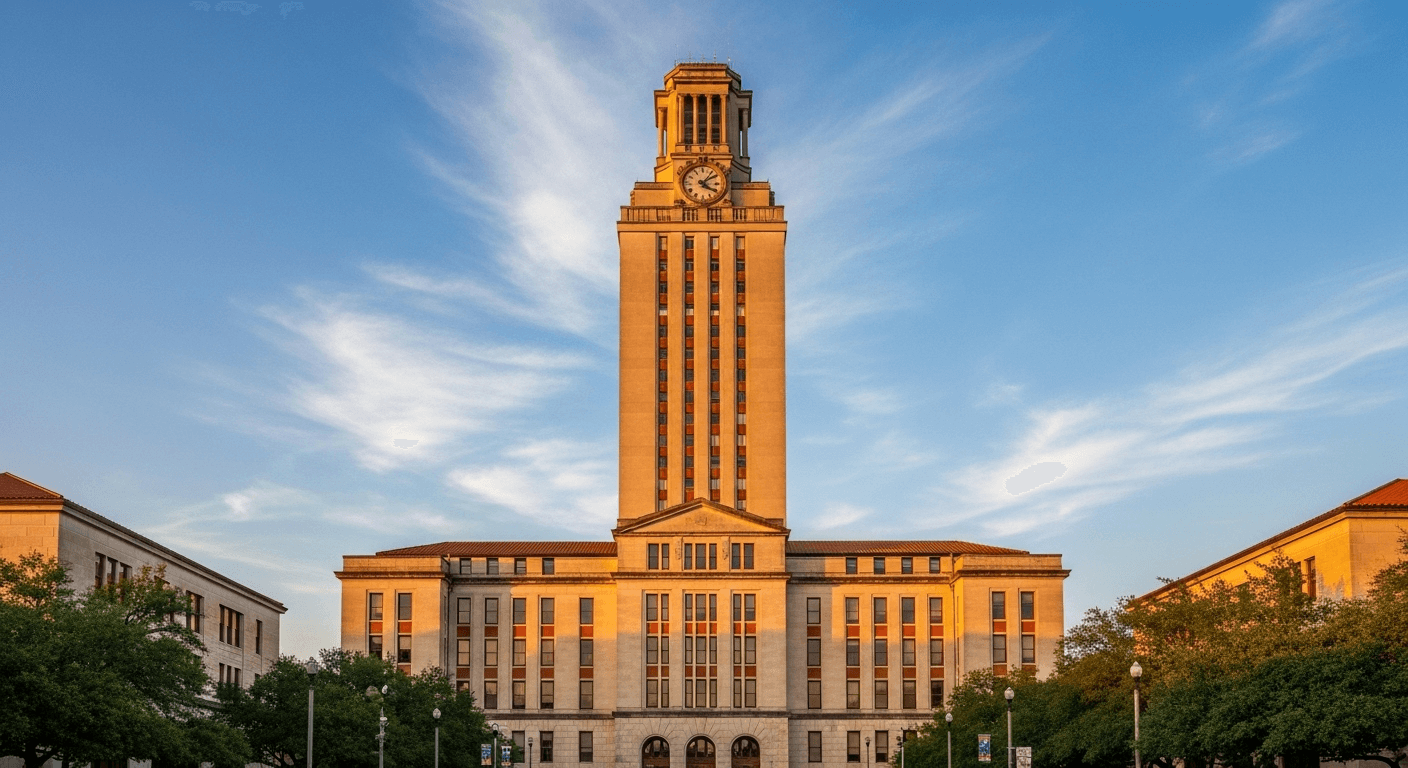
UT Austin · Cockrell Engineering admission
UT Austin Engineering (Cockrell) Admission
Cockrell School of Engineering admits direct-to-discipline. Overall acceptance rate is approximately 15-25%, varying by discipline. ECE is most selective (~10-15%); Civil and Mechanical are most accessible (~20-25%); Petroleum, Aerospace, Biomedical are highly selective (~15-20%). Admitted profile: 3.9-4.0 unweighted GPA, SAT 1450-1530, top 5% class rank, strong math and science course rigor. Non-resident acceptance is 30-40% below overall rates.
Cockrell acceptance rate by discipline
| Discipline | Overall Acceptance Rate | Non-Resident Rate | National Ranking |
|---|---|---|---|
| Electrical and Computer Engineering (ECE) | ~10-15% | ~7-10% | Top 12 |
| Biomedical Engineering | ~12-18% | ~8-12% | Top 15 |
| Aerospace Engineering | ~15-20% | ~10-13% | Top 10 |
| Petroleum Engineering | ~15-20% | ~10-13% | #1-3 nationally |
| Chemical Engineering | ~18-22% | ~12-15% | Top 10 |
| Civil Engineering | ~20-25% | ~15-18% | Top 10 |
| Mechanical Engineering | ~20-25% | ~15-18% | Top 15 |
| Industrial and Systems Engineering | ~22-28% | ~15-20% | Top 20 |
| Software Engineering | ~10-15% | ~7-10% | Top 15 |
| Architectural Engineering | ~20-25% | ~15-20% | Top 20 |
| Computational Engineering | ~18-22% | ~12-15% | Top 15 |
Admitted Cockrell student profile
- Unweighted GPA: 3.9-4.0 (middle 50%)
- Class rank: top 5% of class
- SAT: 1450-1530 (varies by discipline, ECE/BME higher)
- ACT: 32-35 (middle 50%)
- Course rigor: AP Calculus BC (4 or 5), AP Physics 1 and C (4 or 5), AP Chemistry (4 or 5), AP Computer Science A or post-AP math/CS courses where available
- STEM extracurriculars: robotics, science fair, math olympiad, engineering competitions (FRC, FTC, USAMO), independent projects, summer engineering programs
What Cockrell admissions wants
Specific discipline interest
Cockrell admits direct-to-discipline. Strong applicants demonstrate specific interest in their chosen discipline. Aerospace applicants discuss flight, propulsion, or space; biomedical applicants discuss medical devices, prosthetics, or healthcare technology; petroleum applicants discuss energy industry, drilling, or reservoirs; chemical applicants discuss manufacturing or pharmaceuticals. Generic "I want to be an engineer" essays do not get admitted to specific disciplines.
Math and science rigor
Engineering at Cockrell is mathematically intense (Calculus 1 and 2, Differential Equations, Linear Algebra in lower-division). Strong applicants demonstrate math foundation through AP Calculus BC, AP Statistics, and any post-AP math available. Physics foundation through AP Physics C is strongly preferred (Mechanics and E&M).
Hands-on engineering experience
Strong Cockrell applicants have built things: robotics team participation, science fair projects with engineering content, summer engineering programs (MIT Beaver Works, Penn Engineering Summer Academies), independent projects (3D printing, electronics, software), or paid engineering-adjacent work.
Quantitative aptitude
Engineering admissions reads for analytical/quantitative thinking. Strong applicants have strong math test scores, evidence of analytical thinking in essays, and demonstrate problem-solving impact in extracurriculars.
The 11 Cockrell disciplines explained
Aerospace Engineering
Flight vehicles, propulsion, space systems. Strong placement to Boeing, Lockheed Martin, NASA, SpaceX. UT Aerospace ranks top 10 nationally. ~5% of Cockrell enrollment.
Architectural Engineering
Building systems integration, structural design, HVAC, lighting. Joint program with School of Architecture. Strong placement to construction firms and consulting engineering.
Biomedical Engineering
Medical devices, prosthetics, tissue engineering, biomechanics. Strong placement to medical device companies (Medtronic, Abbott, Stryker), pharmaceuticals (Pfizer, Merck), and medical school for pre-med BME students.
Chemical Engineering
Chemical processing, energy, materials, pharmaceuticals. Strong placement to ExxonMobil, Dow, DuPont, Chevron, BASF. UT ChemE ranks top 10 nationally.
Civil Engineering
Structures, transportation, water resources, geotechnical, construction management. Strong placement to engineering consulting (AECOM, Jacobs, Bechtel), state DOTs, and construction firms. UT Civil ranks top 10 nationally.
Computational Engineering
Newer discipline combining engineering with computational methods. Strong placement to tech and engineering computing roles.
Electrical and Computer Engineering (ECE)
Most selective Cockrell discipline. Combines electrical engineering with computer engineering. Strong placement to tech (Apple, Nvidia, Texas Instruments, Qualcomm) and software roles. Often serves as the "backup" for students who do not get UT CS direct admit.
Industrial and Systems Engineering
Operations research, manufacturing systems, supply chain optimization. Strong placement to consulting (Accenture, Deloitte), manufacturing, and analytics roles. UT IE ranks top 20 nationally.
Mechanical Engineering
The largest Cockrell discipline. Covers traditional mechanical engineering (machines, thermodynamics, fluid mechanics) plus modern applications (robotics, mechatronics). Strong placement across industries.
Petroleum Engineering
Oil and gas reservoir engineering, drilling, production. UT Petroleum is consistently #1-3 nationally. Strong placement to ExxonMobil, Chevron, ConocoPhillips, Pioneer Natural Resources. Highest starting salaries within Cockrell.
Software Engineering
Newer discipline (~2020) covering software development as engineering. Strong tech industry placement. Often selected by students who do not get UT CS direct admit.
The internal transfer landscape
Internal transfer between Cockrell disciplines is possible. Common moves: from Civil/Mechanical to ECE or Software Engineering (more selective destinations); from Chemical to Petroleum (small move). Internal transfer requires meeting the destination discipline's GPA threshold (typically 3.5-3.85 depending on target) and any prerequisite coursework.
Engineering Honors track
- What it is: Cockrell's honors track for high-academic students
- Size: ~150 students across all disciplines per cohort
- Application: separate honors essay submitted alongside Cockrell application
- Selectivity: ~15-25% acceptance by discipline
- Benefits: small honors seminars, faculty research mentorship, priority for Cockrell scholarships, thesis option, strong PhD placement
The residency pathway for Cockrell admits
Engineering cost with residency pathway
Out-of-state Cockrell direct admit faces year 1 tuition of $51,800. With the Texas residency pathway pursued during year 1 and approved for year 2, tuition drops to $14,500/year for years 2-4, saving approximately $37,300/year. Four-year tuition with pathway: ~$95,300, vs without pathway: ~$207,200. Savings: ~$111,900 over four years.
Frequently asked questions
What is the UT Austin Engineering acceptance rate?
What GPA does UT Engineering require?
What SAT/ACT score does UT Engineering require?
How do I get admitted to a specific Cockrell discipline?
Which Cockrell discipline is the most selective?
Can I switch engineering disciplines after admission?
What is the Engineering Honors track at Cockrell?
What is the Cockrell career placement like?
Talk to Luke
Your situation is specific. Get a written answer.
The site covers the general case. If your circumstances do not quite fit — divorce, military, scholarship interactions, late timing, prior denial — send a message. Luke replies personally, usually within one business day.
Or send a message and Luke will reply in writing: